
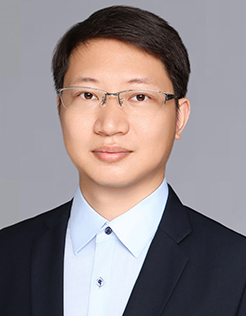
CUI, Zequn
Associate Professor
Master's Supervisor
He is the inventor of two PCT patents and one granted US patent, and has published more than 30 papers in top international academic journals, including Nature Electronics, Nature Communications, Advanced Materials, ACS Nano and Applied Physics Letters. He serves as a Guest Editor for Soft Science and a Young Editorial Board Member of international journals such as Soft Science and BMEMat, and is a recipient of the Third Prize of the Jiangsu Provincial Science and Technology Award. He has been invited to participate in the formulation of relevant industry standards in the field of embodied intelligence.
In May 2026, he was appointed Executive Dean of the Soochow University-Uniconn Technology Joint Research Institute for Flexible Interfaces and Intelligent Sensing. In this role, he oversees the overall layout of research projects and planning of research agendas for the institute, and leads the industrial translation of electronic skin technologies as well as industry-university-research collaborative innovation initiatives.
Embodied intelligence is identified as a priority strategic emerging industry in the national 15th Five-Year Plan Outline. Electronic skin is universally recognized as the core sensing technology for embodied intelligence across the industry. Advancing electronic skin technologies constitutes a vital measure to implement national strategic arrangements and seize the commanding heights of global technological competition in the future. Centered on the industrial translation demands of electronic skin technologies, our team targets and tackles fundamental scientific issues, key application technologies and engineering bottlenecks in the field.
Our research group sincerely welcomes students with genuine passion for scientific research and an inquisitive mindset to apply for admission. We embrace applicants with diverse disciplinary backgrounds. Students majoring in physics, chemistry, materials science, mechanical engineering, electronic information, computer science and other related disciplines can all identify suitable research entry points and clear career development pathways aligned with their expertise within this field.
199 Ren'ai Road, Suzhou Industrial Park, Jiangsu Province, China
J Tu, Z Cai, Z Liu, J Su, Y Li, X Feng*, Z Cui*, X Chen*, Quantitative Tactile Sensing of Surface Microstructures Through Time-Domain Analysis of Piezoelectric Twin Signals. Advanced Materials 38, e10393 (2026). Doi.org/10.1002/adma.202510393.
Z. Cui#, W. Wang#, H. Xia#, C. Wang, J. Tu, S. Ji, J. M. R. Tan, Z. Liu, F. Zhang, W. Li, Z. Lv, Z. Li, W. Guo, N. Y. Koh, K. B. Ng, X. Feng, Y. Zheng*, X. Chen*, Freestanding and Scalable Force-softness Bimodal Sensor Arrays for Haptically Body Feature Identification. Advanced Materials 34, 2207016 (2022). Doi.org/10.1002/adma.202207016.
Z. Cui, W. Wang, L. Guo, Z. Liu, P. Cai, Y. Cui, T. Wang, C. Wang, M. Zhu, Y. Zhou, W. Liu, Y. Zheng, G. Deng*, C. Xu*, X. Chen*, Haptically quantifying Young's modulus of soft materials using a self-locked stretchable strain sensor. Advanced Materials 34, 2104078 (2022) (Cover). Doi.org/10.1002/adma.202104078.
T. Wang#, Z. Cui# , Y. Liu*, D. Lu, M. Wang, C. Wan, W. R. Leow, C. Wang, L. Pan, X. Cao, Y. Huang, Z. Liu, A. L. Y. Tok, X. Chen*, Mechanically Durable Memristor Arrays Based on a Discrete Structure Design. Advanced Materials 34, 2106212 (2022). Doi.org/10.1002/adma.202106212.

View:1111337
